
Eco or Excess?
When green turns into greed
by the Eco-lokohan team | 3 min. read
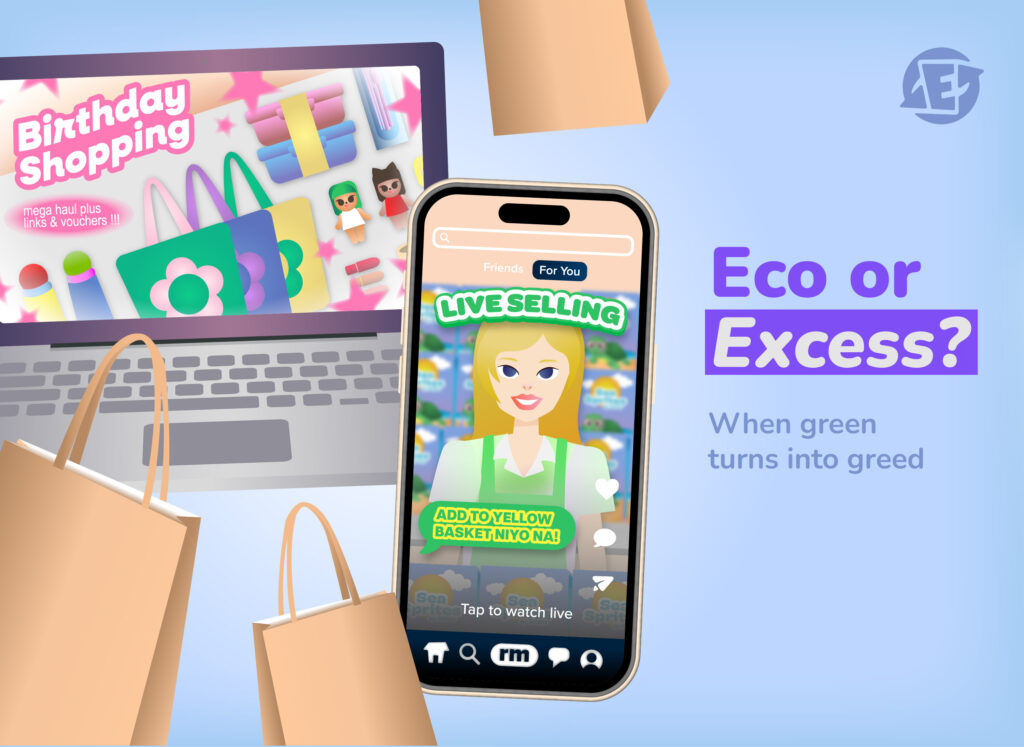
Today’s fast-paced trend cycle combined with how accessible it is to keep up with trends push us to develop overconsumption tendencies. Most of us have probably fallen for modern shopping gimmicks such as TikTok’s yellow basket or Shopee’s monthly sales, which make it so easy to purchase so much, so quickly. In the context of eco-products, green marketing gives us more excuses to consume – besides, if it’s eco-friendly, it must be okay, right? But eventually, it gets to a point – when does eco turn into excess?
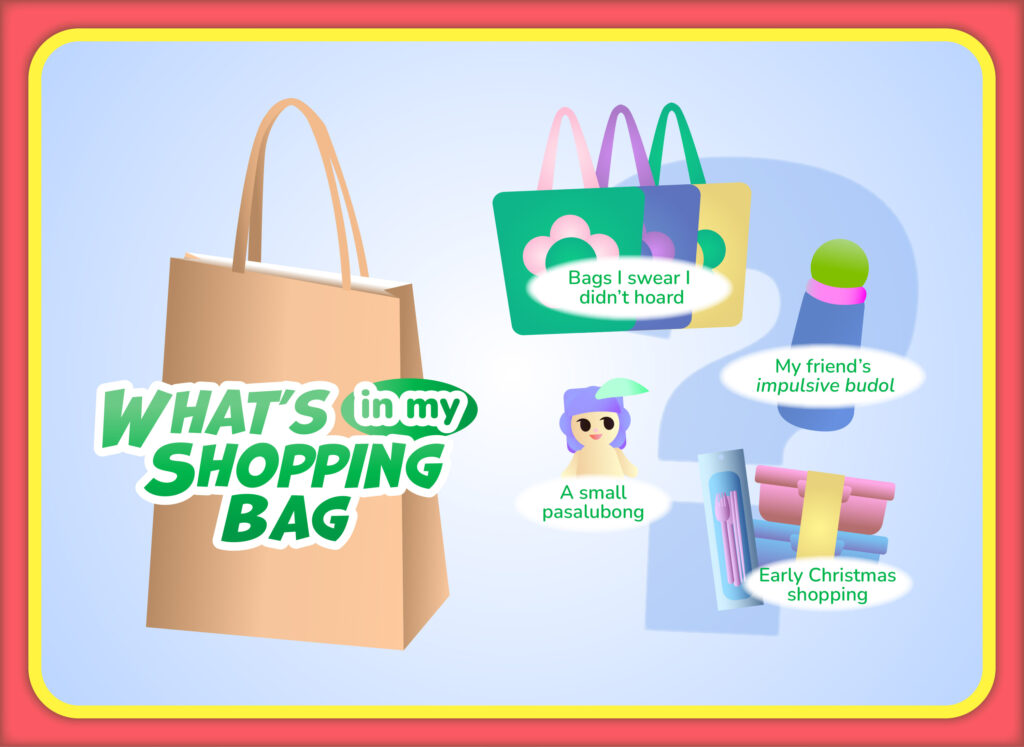
As a society, when and why did we start normalizing overconsumption? A common culprit is the rise of haul and collectible culture brought about by social media, where cumulative purchases are glorified for their novelty. Collectibles such as blindboxed toys have been rapidly gaining popularity, reinforcing this culture of unnecessary consumption. Notably, in the context of eco-friendly products, emergence of trends such as collecting multiple variations of branded water bottles are a concrete manifestation of this paradox, wherein the eco-friendly intent of products are outweighed by the quantity in which they are consumed – creating a negative environmental impact instead. In the Filipino context, this behavior is further enabled through various factors the Ecolokohan team uncovered through a focus group discussion. A prime example of this is budol culture, wherein we are quite literally encouraged to consume by our friends. Combining this with the Filipino tendency to hoard, along with consumption-centered cultural practices such as Christmas and the pasalubong culture, it’s easy to fall for the never-ending opportunities to score good deals from brands.
Choosing eco-products over others can actually help, but only if they’re verified to be sustainable and are used in the long-term. In the bigger picture, consumption in itself should not be a primary means to be more eco-friendly. Rather than purchasing more, genuine sustainability is about maximizing what you already have, and being intentional about what you buy. Overconsumption is an issue that stretches way beyond just eco-conscious products – it is a pattern that manifests in the way we consume in general.
To experience how overconsumption tendencies manifest in our shopping habits, go with Eunice on her Christmas shopping journey as you help her choose her path by immersing yourself in the Eco-lokohan hypernarrative.

 © Eco-lokohan 2025
Sooo informative!