
Eco o Estetik?
When style overtakes sustainability
by the Eco-lokohan team | 3 min. read
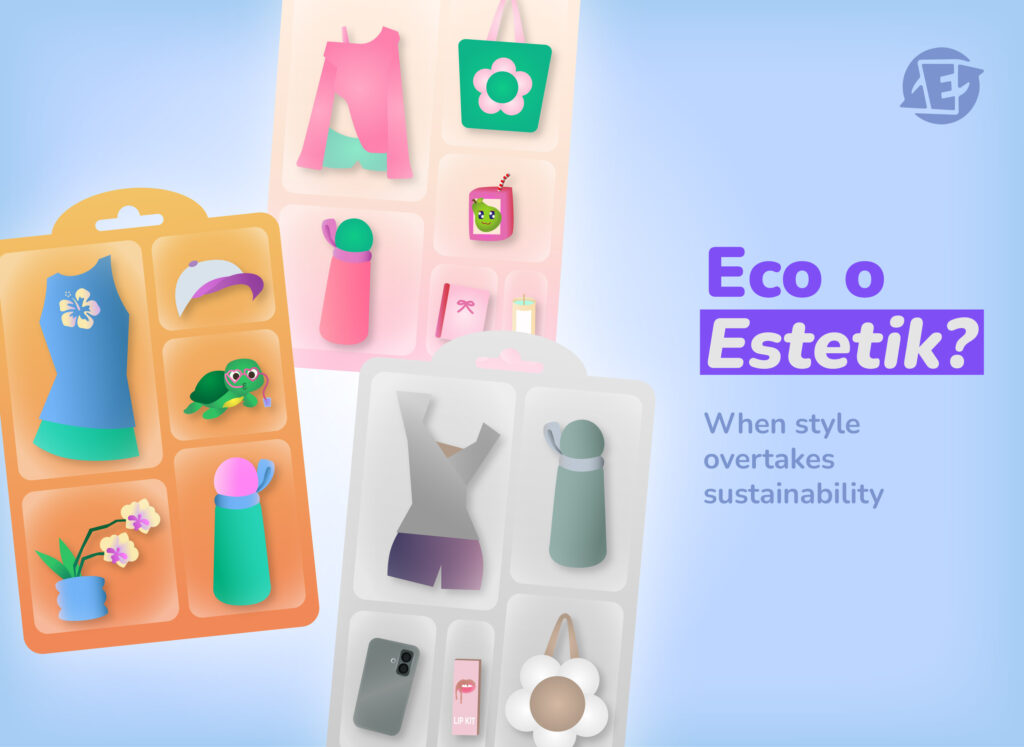
We’ve all been there – riding on trends and purchasing items for the estetik, or in even simpler words, because we like the way they look. It’s normal to be drawn to purchasing items that appeal to us visually, which brands know very well. Eco-friendly products such as water bottles, reusable tote bags, and utensils are no stranger to this, with brands capitalizing on this aesthetic trend by creating and marketing products that cater to aesthetic-driven consumers. But, when and how do styles and aesthetics influence our perception of products a bit too much, overtaking sustainability?
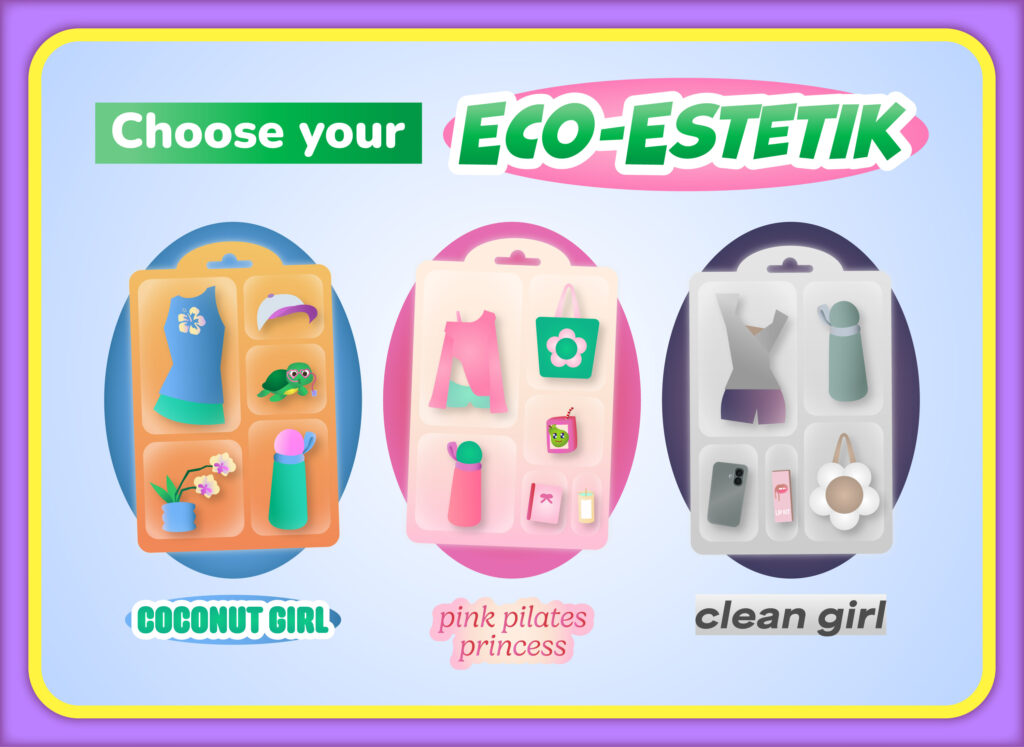
As part of a study conducted by the Eco-lokohan team, it was found that the youth admittedly leans towards trendier, aesthetically-pleasing products even though their eco-impact is unclear, over products that have clearer positive environmental impact. Consumers considered color options, customizability, packaging, and a wide array of product variations to be the top factors present in products and advertising that influence them. These factors being centered on aesthetics and consumption show how big of a role it plays. While it may seem harmless, these factors also known as peripheral cues take away from the central intention of the product to be eco-friendly. In combination with greenwashing and strategies to push consumers to buy, aesthetics are the “final straw” that brands employ in order to get consumers to add to cart. This is unhealthy because it influences us into thinking that being eco-friendly becomes more of a look and an aesthetic in itself, rather than a genuine sustainable habit.
Moreover, due to sustainability in itself becoming an aesthetic, it changes the way we view being eco-friendly in a subconscious and negative way. Due to the way eco-products are marketed to emphasize aesthetics, we operate based on vibes, instead of being consumers that put sustainability related information first – as stated by a participant in a group discussion held by the Ecolokohan team. What started out to be eco-friendly products at their core are now known for their aesthetic value, giving brands more opportunities to slack on ensuring their products are genuinely sustainable. Moreover, this issue also manifests in the way being eco-friendly is seen merely as a surface-level quirk or personality trait, without putting in genuine efforts outside consumption of aesthetic eco-products.
To better realize how aesthetics can undermine the intent to be genuinely sustainable, go with Eunice on her Christmas shopping journey as you help her choose her path by immersing yourself in the Eco-lokohan hypernarrative.

 © Eco-lokohan 2025
Estetik!!!!!!